After the Mauryan ruler Ashoka, Kanishka, a Kushan ruler, played a major role in spreading Buddhism in the Kashmir region. This was the time when statues of Lord Buddha started being made and Mahayana Buddhism emerged. After the Kushan dynasty, the Huns ruled Kashmir for a short time. Then came the rise of the Karkota dynasty, from which came Lalitaditya Muktapida, who is considered the greatest king of Kashmir.
In the 8th century, when India was divided into many small kingdoms, a great king was ruling the mountains of Kashmir — Lalitaditya Muktapida. He was not only a great warrior but also a master builder and protector of culture. He built amazing temples like the Martand Sun Temple, whose glory still echoes in the air of Kashmir. It is said that he raised his victory flags from the Arabs to Tibet. But his end remains a mystery — he went on a campaign and never returned. History asks more questions about his mysterious end than his life.
The early medieval history of Kashmir is both tragic and remarkable. During the times of Lalitaditya, Jayapida, and Avantivarman, Kashmir was prosperous and peaceful. Art, literature, and philosophy flourished. But after Avantivarman, conditions began to worsen. Continuous wars, rebellions, and natural disasters devastated Kashmir. Temples were destroyed, cities were burned, and kings kept changing.
Though Hindu rulers continued to govern Kashmir until the 14th century, a large part of the population had accepted Islam by then. The influence of the Delhi Sultanate in North India could clearly be seen in Kashmir. As we know, the Arabs were the first Muslims to invade India, and Sindh was the first Indian region to come under Muslim rule. Around the same time, Lalitaditya and other kings fought the Arab armies and kept Kashmir safe.
Later, Shah Mir, also known as Sultan Shams-ud-din, established himself as the first Muslim ruler of Kashmir. Surprisingly, Shah Mir did not fight any war — he was a minister in the court of Kota Rani, the last ruler of the Lohara dynasty, and took everything from her through deceit.
Zain-ul-Abidin is considered the most famous Muslim ruler of Kashmir. He was from the Shah Mir dynasty and ruled from 1420 to 1470. He was given the title “Budshah” (Great King). His reign is known as the Golden Age of Kashmir. He promoted religious tolerance and restored the religious rights of Hindus. He also supported art, literature, and crafts. His reforms and policies are still remembered as a model in Kashmiri history.
In 1586, Akbar defeated Yusuf Shah Chak and annexed Kashmir into the Mughal Empire. During Mughal rule, there was peace and development in Kashmir. Jahangir described the place as paradise and built beautiful gardens like Shalimar and Nishat Bagh.
After the Mughals, Afghans ruled Kashmir for a long time. In 1819, Maharaja Ranjit Singh’s Sikh army defeated the last Afghan governor and took control of Kashmir. This ended nearly 500 years of Muslim rule. The Afghan rule was very oppressive, so people welcomed the Sikh victory.
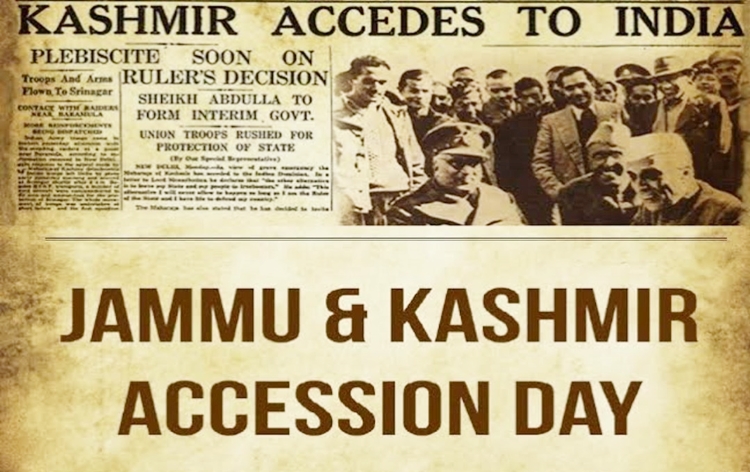
In 1846, after the Sikh-British war, Gulab Singh, who was a major landlord under Ranjit Singh, bought Kashmir from the British under the Treaty of Amritsar and founded the Dogra dynasty. His great-grandson, Raja Hari Singh, was the one who decided to join India in 1947 in return for help against Pakistan.