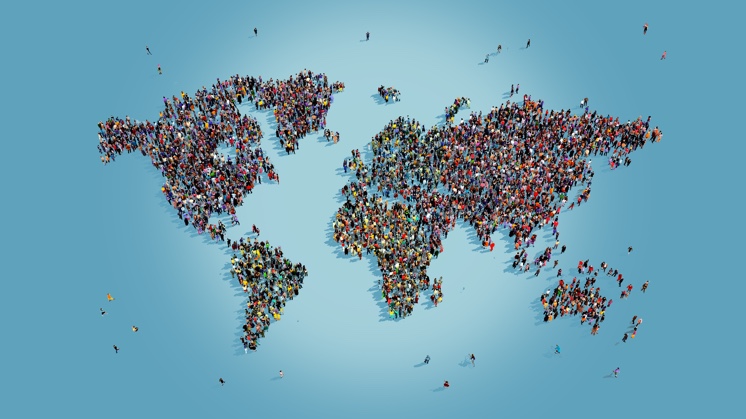
In ancient times, human activities were largely shaped by the laws of nature. These natural laws were fixed and operated according to cause and effect. Humans were highly dependent on nature, which was often uncertain and hostile. Natural disasters, climatic changes, and scarcity frequently brought tragedy and destruction. This uncertainty created conditions in which human beings had to cooperate, develop moral systems, and create shared meanings for survival. From this process, culture gradually emerged.
The experiences that humans gained while dealing with nature were passed on from one generation to the next. This accumulated knowledge, learned over time and shared within society, came to be known as culture. Therefore, culture can be defined as a complex system that includes knowledge, beliefs, art, morals, laws, customs, and other capabilities and habits acquired by human beings as members of society.
This definition raises an important question: can human free will and conduct be considered part of culture? Free will refers to the human ability to choose from multiple options. However, if free will is completely unregulated, it can lead to confusion and social disorder. For society to function smoothly, there must be a system that guides choices, sets standards, and helps distinguish between right and wrong. Culture performs this role. It does not eliminate free will but shapes and directs it in socially acceptable ways. Thus, culture acts as a guiding framework for human behaviour.
Often, the term civilization is used interchangeably with culture, leading to confusion. This happens because both are related to human life and develop over long periods of time. However, they are not the same. Civilization mainly refers to material and institutional development, such as technology, infrastructure, and governance. Culture, on the other hand, focuses on values, social behaviour, beliefs, and skills that enable people to live harmoniously.
Importance of Culture in Human Life
Culture is deeply connected with human life. It is not an additional feature or a decoration that people can choose to adopt or reject. Culture is what makes us human. Without culture, human life as we know it would not exist. It gives meaning to our actions and helps us understand how to live within society. While human beings create culture, culture also shapes human thinking, behaviour, and identity.
Religion and its symbols form an important part of culture. Religious beliefs have historically provided moral guidance and a sense of belonging to people. In today’s globalized world, individuals from different cultures and religions live closely together. Therefore, it is essential to respect religious identities and encourage dialogue among different cultures. Peaceful coexistence does not mean confusion or loss of identity; it requires understanding and mutual respect. To truly respect other cultures, we must first understand our own, because meaningful dialogue is possible only when we are aware of who we are.
Finally, it is the responsibility of all of us to preserve our culture. Culture is not inherited by birth; it is learned and acquired through social interaction. We learn it from our families, communities, and society. Since culture is learned, it must be consciously transmitted to the next generation. If we, as carriers of culture, fail to pass it on, culture may gradually fade away and survive only as a part of history.