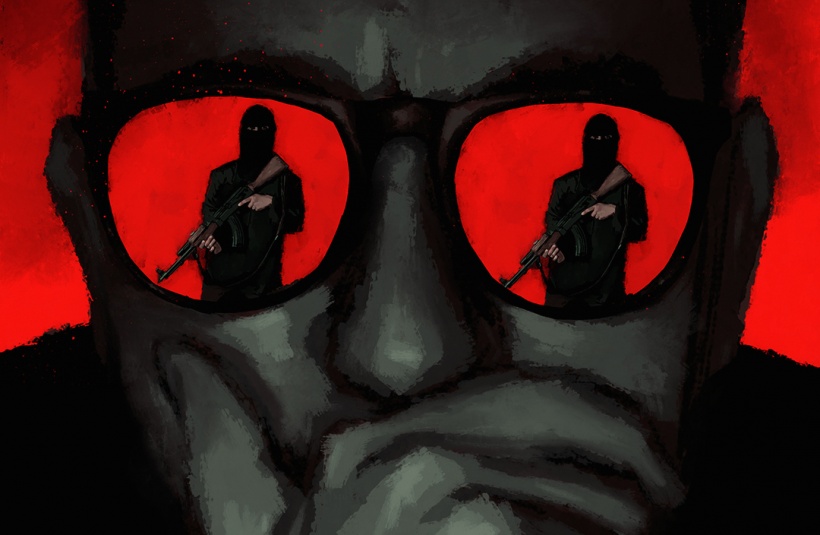
Radicalisation is not just a challenge for India, but for the entire world.
But what exactly is radicalisation?
According to India’s Ministry of Home Affairs, radicalisation is an extremist ideology that inspires a person to engage in violent or aggressive activities. In simple terms, it is a belief system where an individual starts to think that only their views are correct and to fulfill those views, they begin using violence. Terrorism is the best example of this—where some people believe that others must live only according to their religious beliefs, and if not, they should be killed.
In today’s discussion, we will talk about the radicalisation of youth.
Recently, in October 2024, the intelligence department submitted a report to the Ministry of Home Affairs stating that several organisations are trying to incite Indian youth by exploiting the ongoing conflict between Israel and Hamas. The report claimed that many graphic war videos and deepfake visuals are being used for this purpose.
In 2023, the All India DGP Conference was organised in Jaipur, chaired by India’s Home Minister Shri Amit Shah. In this meeting, radicalisation was termed a major threat to internal security—not just for Muslim youth but also for Hindu youth.
If we look at the data, in 2023 alone, more than 625 individuals were accused of provoking and inciting youth. In 2024, there were 210 arrests—all carried out by the NIA (National Investigation Agency), which achieved nearly 100% conviction in all these cases. This shows that such networks are active across India and expanding rapidly. Among the most affected states are Tamil Nadu, Kerala, Maharashtra, Jammu kashmir and Haryana.
So, what steps is the government taking?
Social media is the biggest tool used to promote radicalisation. On platforms like YouTube, Instagram, and Facebook, many videos are uploaded that hurt the religious and social sentiments of youth, which leads them to associate with people who aim to harm society. The central and state governments are highly vigilant in monitoring social media platforms. The Ministry of Home Affairs has established the Cyber Crime Coordination Centre, which tracks and blocks radical content.
Several states have implemented the Police Mitra (Police Friends) scheme, where common citizens are helping police to identify youth involved in such activities. Once identified, these youths undergo counseling and receive training to help them find employment opportunities. Religious leaders are also involved in this initiative to guide the youth on the right path in matters of faith. Additionally, several organisations have been banned and are being closely monitored.
Furthermore, the Indian government is working with international organisations such as FATF, Interpol, the UN Counter-Terrorism Wing, and SCO to stop the funding used in radicalisation. In sensitive areas like Kashmir, rehabilitation programs are being run for militants who surrender.
India’s youth must also understand that hatred cannot be answered with hatred. Cruelty might give you the illusion of strength in the beginning, but in the end, the true victory is achieved through service and dedication, not by overpowering others. The greatest victory is the one over yourself, not over others.